
Why One-Off Stress Management Workshops Do Not Create Lasting Change

Most workplace wellbeing programs don’t change behavior, and it’s worth being honest about why.
For years, the standard move has been the annual event. Bring in a speaker, run a webinar, hand out a stress-management PDF, tick the box. People leave the session feeling motivated. For about a week. Then the deadlines pile back up, the old patterns return, and nothing has actually moved. The company spent the budget and the team is exactly where it started.
The problem is that wellbeing isn’t a thing you absorb in 60 minutes. It’s the sum of what people do on an ordinary Tuesday. How they eat at their desk, whether they move, how they handle the 3pm pressure spike, what time they finally put the laptop down. None of that gets fixed by an inspiring talk. It gets built through small daily habits, repeated until they hold. A one-off event can’t compete with the other 364 days.
Stress Is Not Just a Mindset Issue
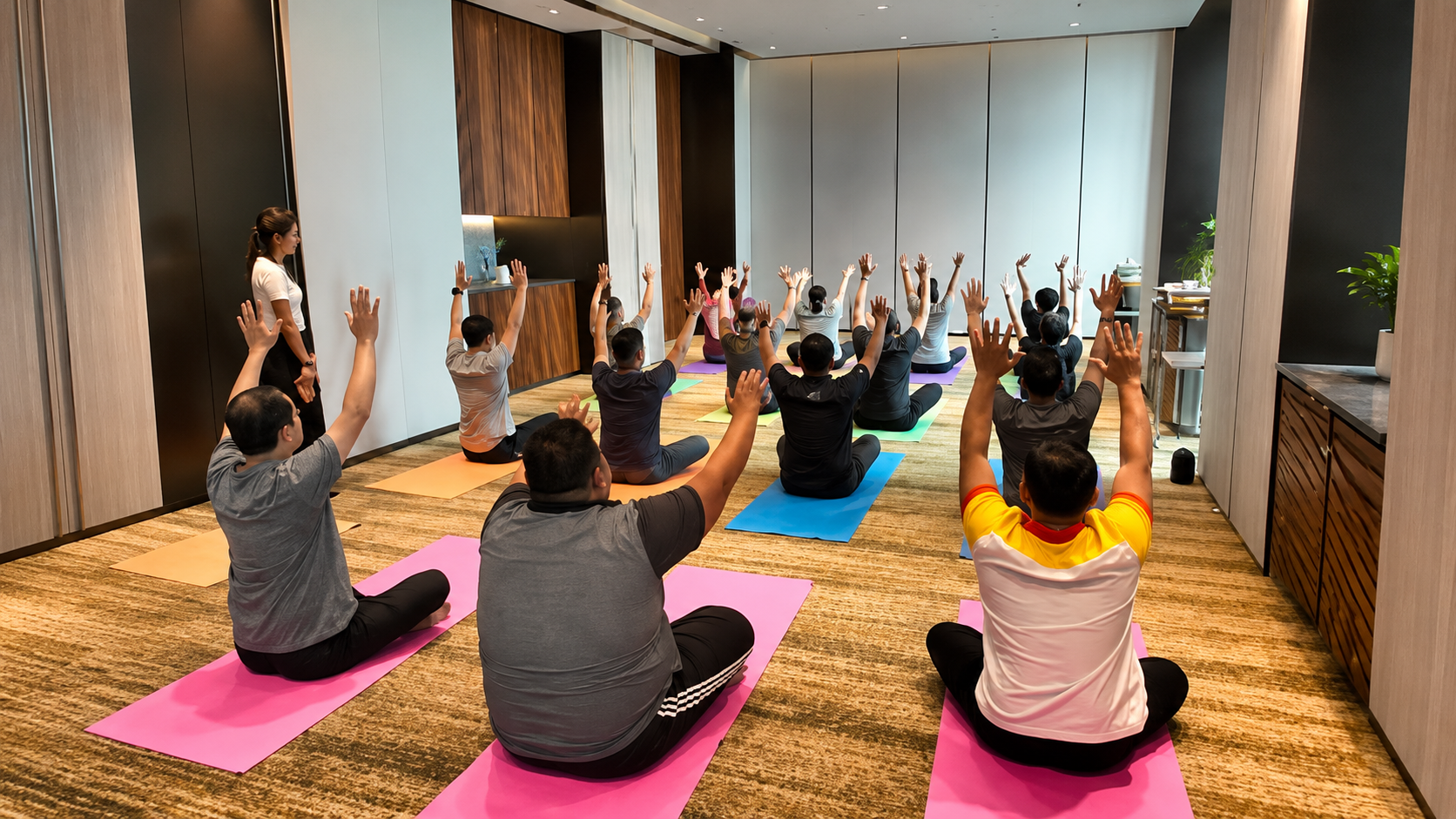
During a recent Stress & Anxiety Management session, I was reminded of an important reality many organisations overlook: stress is not just a mindset issue—it’s a physiological one.
In the workplace, employees often adapt to chronic stress without realising it. Poor sleep, mental fatigue, irritability, reduced focus—these gradually become normalised and are often dismissed as “part of the job.” Yet these are early indicators of nervous system overload, long before performance issues or burnout become visible.
One moment from the session stood out. A participant shared that they had always associated anxiety with panic or visible distress. Instead, theirs showed up as persistent exhaustion and impatience at work. That awareness alone reframed how they understood their behaviour, energy levels, and interactions with colleagues.
This is where effective workplace stress management needs to shift. It’s not about removing pressure or lowering expectations. High-performing organisations will always operate under demand. The goal is to build awareness early, equip employees to recognise their personal stress signals, and support healthier responses before stress translates into disengagement, errors, absenteeism, or turnover.
When employees understand how stress affects attention, emotional regulation, and decision-making, they are better able to sustain performance—especially in fast-paced, high-responsibility roles.
From an organisational perspective, awareness is not a “soft” outcome. It is a preventive capability.
The question for leaders and HR teams is no longer whether stress exists in the workplace—but whether employees are supported to recognise it early and respond effectively.
What Creates Lasting Change?
What actually works is giving people a personal system they can run on their own, every day, long after the workshop ends. Teach them the mechanics of how habits form. Help them pick a few changes small enough to survive a busy week. Give them a way to track and adjust without judgment. Then the workplace becomes the place that supports the habit instead of the place that interrupts it.
The companies getting this right have stopped treating wellbeing as an event on the calendar and started treating it as a practice they help their people sustain. That shift costs less than most annual programs, and it’s the only version that lasts.
For organisations looking beyond one-off sessions, explore Laisha’s Employee Lifestyle Programmes for a longer-term approach to employee wellbeing.